MERSEYSIDE IN MOTION: A JOURNEY THROUGH THE MUSIC THAT SHAPED US
Dale Roberts, a Beatles tour guide in the city, took a bus full of music enthusiasts on ajourney through the different boroughs of Merseyside, to discover its heritage through those who shaped it.
We learned about how music has defined different eras, making Liverpool the place it is today. As we made our way to New Brighton, Dale talked to us about the connection that has been maintained with the US throughout Liverpool’s history. Ships from the states would arrive in our docks, filled with Rock ‘n’ Roll records that would be traded for jazz albums. Out of this came a wave of musicians fascinated by a genre that hadn’t before made it to UK shores. They started Skiffle groups, using pots and pans, kitchen utensils, and even washboards, which led to over 30,000 of these bands being formed by the mid to late 1950s. One of them was The Quarrymen, which consisted of John Lennon, Paul McCartney and George Harrison.
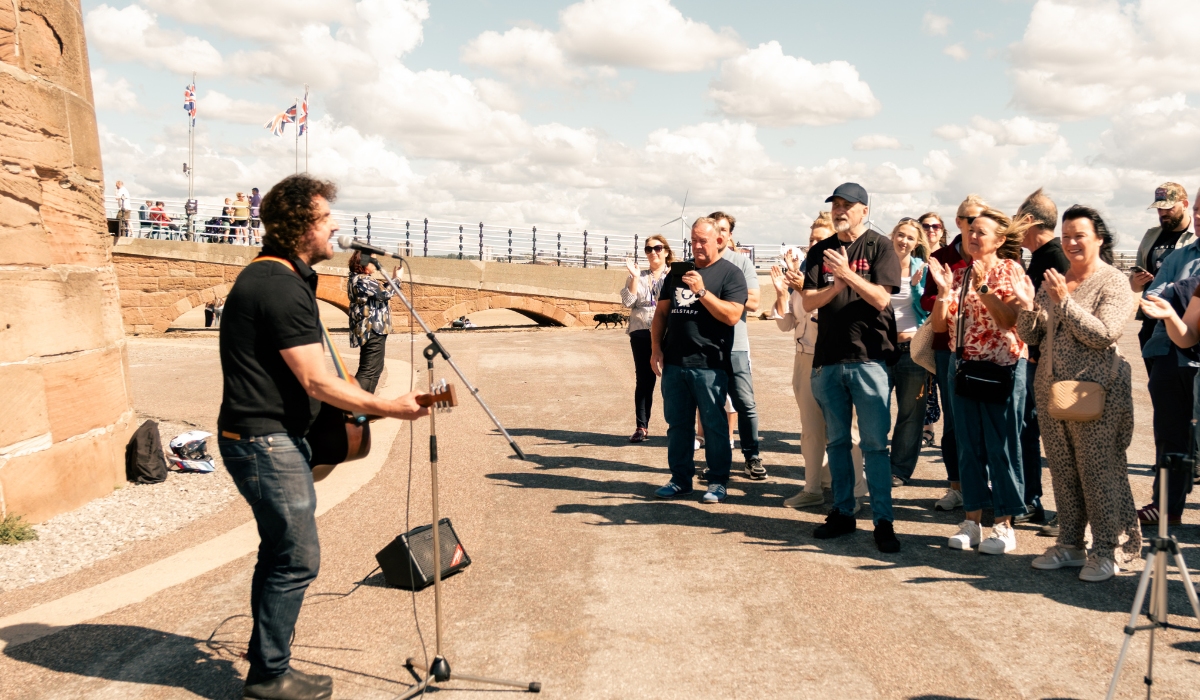
Many others influenced by rock emerged, including Rory Storm and the Hurricanes with Ringo Starr on the kit, and Billy Fury, who was England’s answer to Elvis Presley. Live music has always made our city so vibrant, and Ian Prowse, a local artist who champions this, played a set on the seaside to kick off the day. One member of the audience enjoyed it greatly, stating that the set was “real and from the heart”.
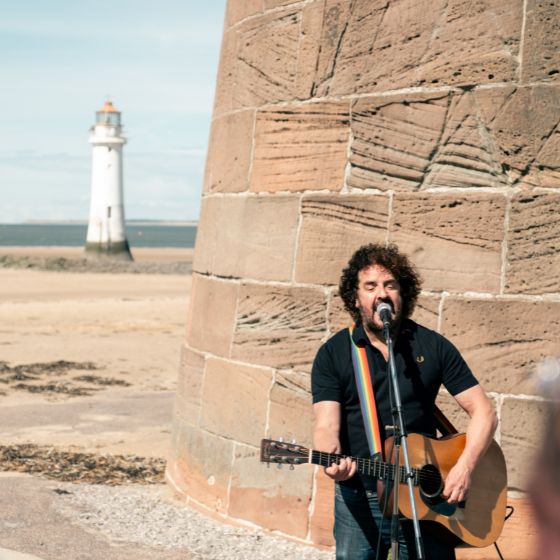
Ian plays The Cavern Club every Monday, a venue that remains iconic and known for The Beatles playing there 292 times. Its foundations actually lay in jazz, although skiffle was allowed to be played among increasing popularity. Rock was originally banned in the club, but with a change of ownership and a wave of Mersey Beat emerging, the tides began to turn. This movement was led by Bill Harry, a journalist that after rejection from The Liverpool Echo, set up the ‘Mersey Beat’ magazine, believing that what was happening was bigger than New Orleans’ Rhythm and Blues scene. We were told by Dale about the many artists of importance, including Cilla Black, who was the cloakroom girl at the time. Another artist, one that became the first female in the UK to have a single top the charts, was Lita Roza, who came as a precursor to the popular music that was to follow.
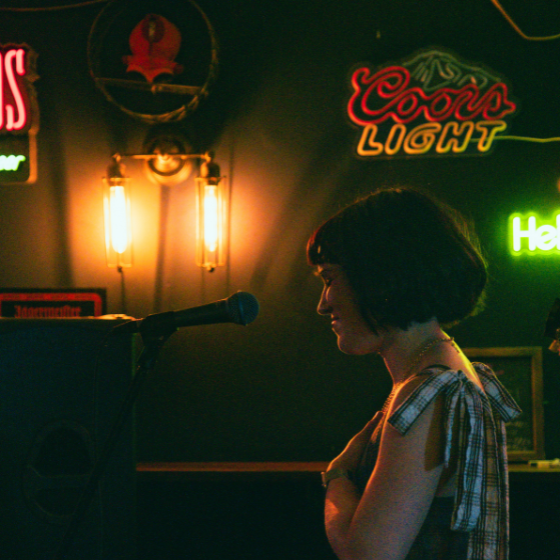
In St. Helens, Rianne Downey, a Scottish folk artist, played some original material, alongside a beautiful rendition of ‘Till There Was You’. Our guide maintained that “the most important thing about Liverpool is the people”. This includes the large Irish diaspora that came over during the great famine. Legendary folk musician, Christy Moore, covered Ian Prowse’s ‘Does This Train Stop on Merseyside’, referencing the shared history between the two places.
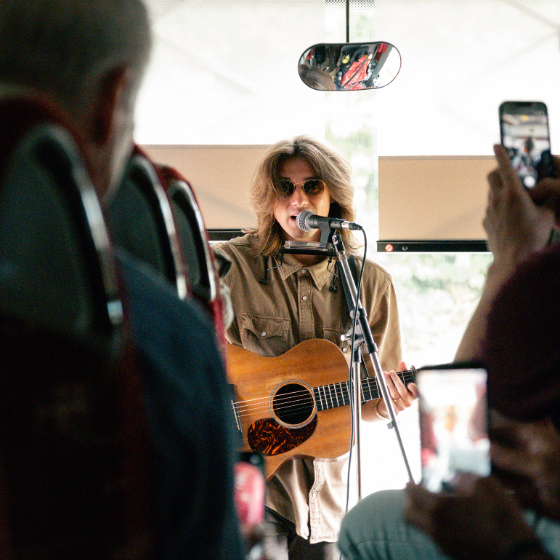
Rianne is another example of how great music in Liverpool is down to influence from other cultures that make up the city. Our next stop took us to Spike Island in Widnes, artificial land that has held many notable concerts, such as in 1990 when The Stone Roses took to the stage. Different memories are held on the chaos of the day, but it remains to be seen as the high-water mark of the ‘Madchester’ era and a nod towards the raving culture of the time. Callum Codd was the artist that took to the stage this time around, that being the front of our tour bus. He made the venue shake with his powerful voice and guitar in-hand.
No other place could have concluded the tour, other than The Cavern. Dale’s aim after the tour had concluded, to “see Liverpool as a much more beautiful place, one that completely and utterly changed the world through the power of music” had certainly been achieved.