34 YEARS ON: HOW AFRICA OYÉ CONTINUES TO EVOLVE
After Africa Oyé 2026 surpassed expectations for the festival organisers this past June, we asked the charity’s Artistic Director Paul Duhaney to reflect on the history of the event and everything that has led to what has been described as ’an exciting new era’ for the UK’s biggest celebration of African music and culture.
When you go through the 34-year history of the Africa Oyé Festival, it’s hard to imagine a more well-travelled Liverpool institution.
The festival originally came out of the Monthly ‘Club Corinto’ nights which were produced by the Nicaragua Solidarity Campaign. In 1992 a group of people in Liverpool came together to produce a programme under the banner of the ‘500 years of Resistance’ whilst others were celebrating 500 years of the ‘discovery’ of America.
Africa Oyé was one of the projects that became part of the cultural programme under this banner, beginning its storied journey as an African and Latin American festival.
Over the next three decades Oyé would grow and evolve every few years, taking the long-way round to the festival it has become today.
Many people remember us fondly as the music programme of the Balloon Festival in Birkenhead. And for many years we were a multi-venue event that took place in the likes of Concert Square, the Albert Dock, Nation/ Cream, as well as a many other venues throughout the city.
The much under-used Princes Park was our home for a short time before we found where we were clearly meant to be – the Grade-1 listed greenspace that is Liverpool’s Sefton Park.
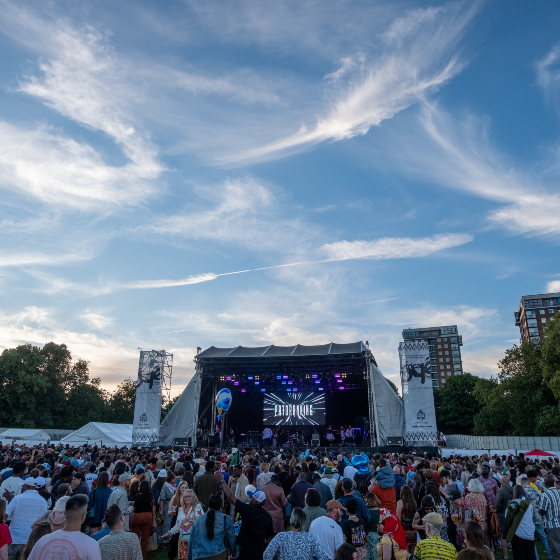
We were initially located in the ‘Farmer’s Field’ by the Palm House, and then moved to a larger site, the ‘Review Field’ of Sefton Park, in 2008 and it is that location that has seen us through our latest big milestone – the change from being a free and open festival, to one that is now ticketed and fenced.
The decision to change one of the fundamentals of what people loved about Africa Oyé was not one that we enjoyed making. We explored every possible avenue that might allow us to carry on the way that we were but none of them were viable.
We had become the classic ‘victim of our own success’. The sheer amount of money that would have to have been spent for the authorities to even entertain giving us a license to carry on as free and unfenced was eye-watering. In truth, even if we’d managed to somehow raise the additional funds, the incoming legislation around Martyn’s Law – which we fully support – would likely have made any alternative to the ‘steel shield’ a complete non-starter.
It quickly became apparent that it was a case of make the changes or don’t come back at all. Disappearing with a whimper was not something any of the team wanted to do and we hoped and prayed that our audience felt the same and would understand why the changes had to be made.
In truth, we really didn’t know what to expect when we took this leap of faith and put the tickets on sale last October. We were told by some very loud voices on social media that everyone only came in their thousands because it was a free day out.
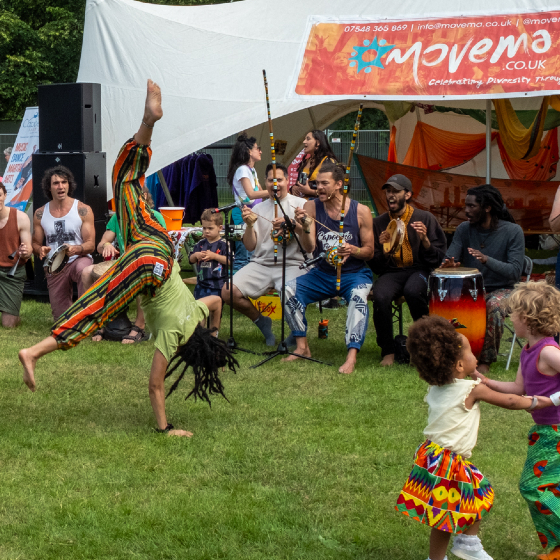
Though judging by the overwhelmingly positive feedback we’ve had from the 20,000 people who joined us over the festival weekend this past June, it looks like we made the right call to return as we did.
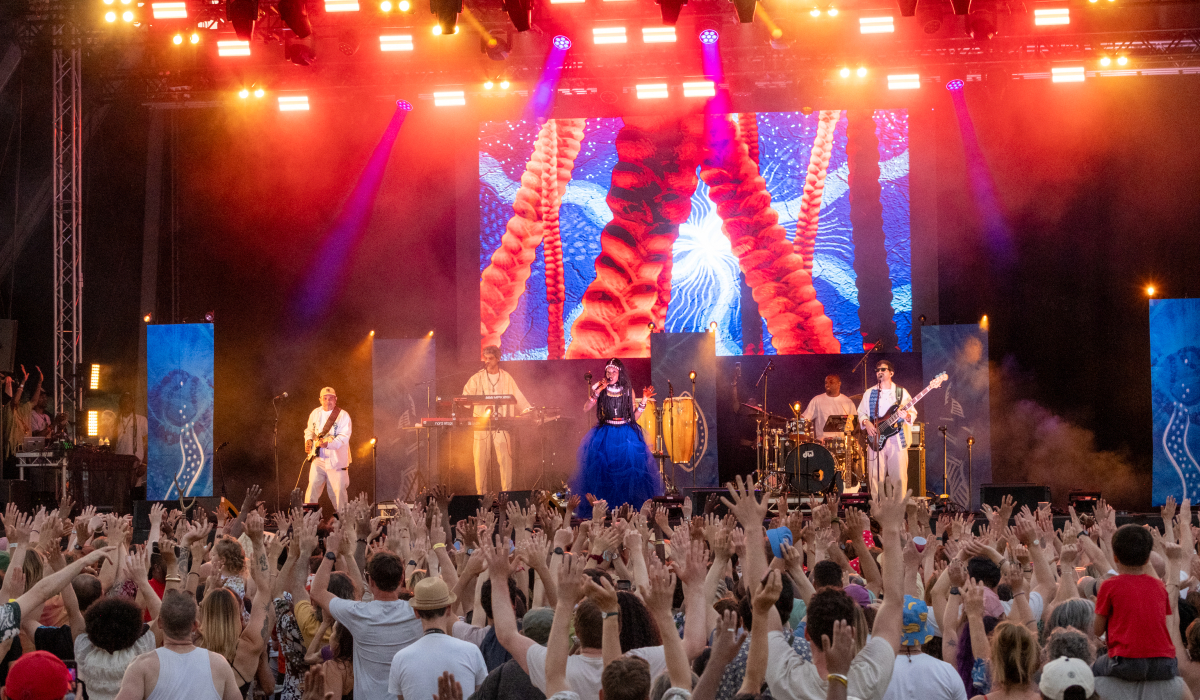
Our sold-out Saturday felt like we’d wound the clock back to an Oyé of 10 years ago. A more chilled vibe but with an incredible line-up of live acts, DJs and workshops that more recent members of the Oyé Family would still be accustomed to.
A beautiful full circle moment came around on the Sunday evening with the sun going down, as our headliner Fatoumata Diawara took to the stage 15 years since she first performed at Oyé. Back in 2010 after performing as part of the great Oumou Sangaré’s band in Liverpool at the Philharmonic, she had handed me a CD backstage of her solo work, asking if she could play the festival. Even back then her star quality was apparent, so we of course booked her to play what ended up being her first UK festval show in 2011.
There will no doubt be more milestones and changes to the festival over the next 30 years as we navigate an ever-challenging industry sector as a non-profit and registered charity that is dedicated to making the music and culture of this incredible continent accessible to as many people as possible,
But having this major shift now under our belts and a dedicated team already looking to what can be done to make next year even more successful, we can look forward to the future with real excitement.
Paul Duhaney, Artistic Director of Africa Oyé