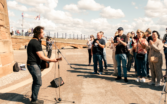
LIVERPOOL MUSIC HERITAGE TRAIL – Up The Hill – The Sink and The Picket
Hardman Street
“Liverpool 8 was the equivalent of Montmartre at the turn of the century.”
George Melly, musician, 1967
The shocking slave trade is never far from the story of the growth of Liverpool. Hardman Street took its name from the Hardman family of Allerton, prominent landowners and slave traders in the 18th century. This steep throughfare developed throughout the 19th century with some buildings from that period still visible.
A journey up the hill was metaphorical as well as highly physical. Hardman Street dissects Rodney Street – once as prestigious in medicine as London’s Harley Street – before taking you into the epicentre of the Georgian Quarter, Hope Street.
This has long been the city’s cultural heartland, where bohemia, creativity and academia collide with Liverpool 8. In the lecture halls, theatres, cafes and bars of the neighbourhood, music was central.
Music
“The next gig we did was O’Connors Tavern. It was packed with art school students… And we did another one and it was absolutely rammed, you couldn’t get in. We turned up and couldn’t get in ourselves. It was mad.”
Steve Allen, Deaf School, 2008
From the late 1960s onwards, Hardman Street developed a reputation for the unusual, experimental and diverse. Hardman House, Baltimore Rooms, and The Magnet – all sadly long gone – hosted regular bespoke live music nights. O’ Connors Tavern, built in 1842 and miraculously still standing, was a game changer though. It introduced poetry, the avant-garde and theatrical pop to a wider audience.
Perhaps the most intriguing building was the beautifully ornate Kirkland Brothers Vienna Bakery – by appointment, bakers to the Queen (no less). It was built in 1888, but for most people, it is more familiar as Kirkland’s, the city’s first wine bar. From the mid-70s to the late ’80s this was the place to be seen. Achingly hip, with a music policy to match, this elegantly designed cafe attracted its own royalty.
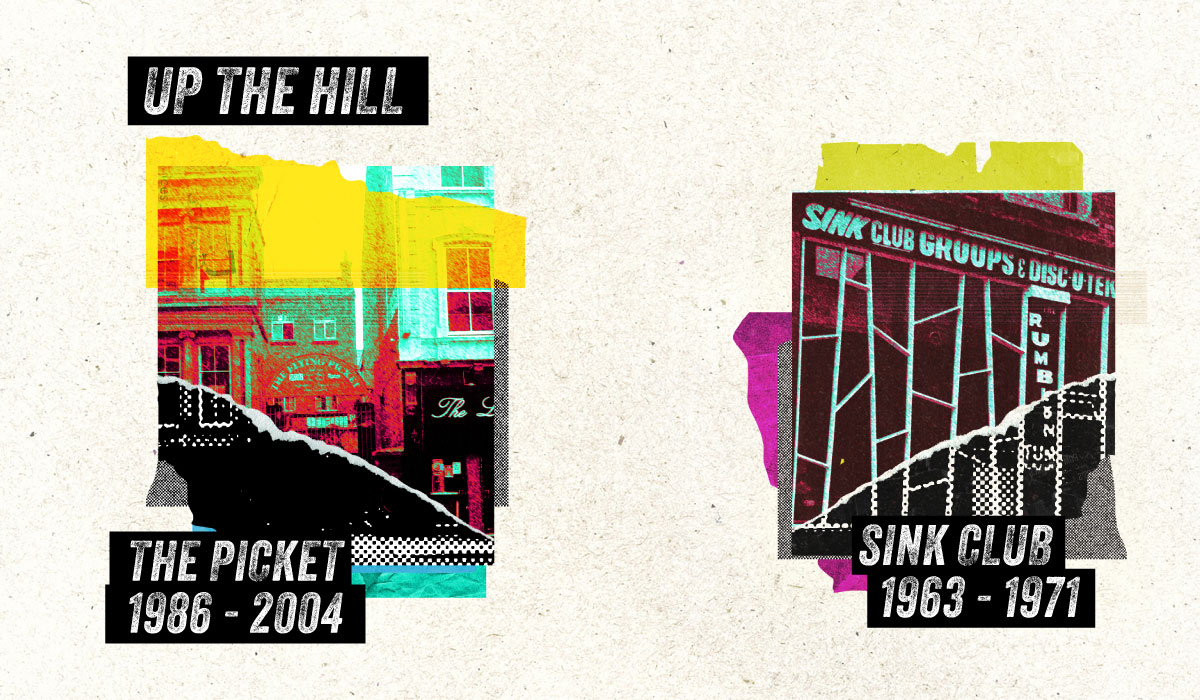
Our music trail champions two long gone venues. They shaped ideas and attitudes way beyond the music.
Sink Club 1963 – 1971
“I loved it because there was no discrimination on the door. Anyone was allowed in regardless of race, age or creed…it was a melting pot… It couldn’t and hasn’t been bettered in Liverpool.”
Ken Barney, Sink regular, 2006
Positioned at the top of the street, the basement club was owned and managed by music entrepreneur Neil English, who also owned Neil’s Corner (a chic boutique on Bold Street).
Created as an alternative to the Merseybeat sound, The Sink was a soul club. It took an idiosyncratic approach to all it did. Proof of membership was a sink plug.
The Picket 1986 – 2004
“I’ve been so proud of the studio. Recently, when I heard The Coral slagging off everyone older than 20, and then that they had passed through The Picket, I cheered!”
Pete Townsend, musician and Picket benefactor, 2004
Unemployment ravaged Liverpool. By the early 1980s one in four were without work. Hardman Street’s most striking building, the Grecian fronted former School for the Blind, now a restaurant, became the Merseyside Trade Union and Unemployed Resource Centre in 1983 – a vital lifeline in desperate times.
A recording studio and music venue were created within the buildings behind the Centre. Primarily for young unemployed people, bands and community groups, and run by local musician Phil Hayes of The High Five, The Picket was born.