BANDS IN THE BOROUGHS: MAKING SPACE IN WIDNES
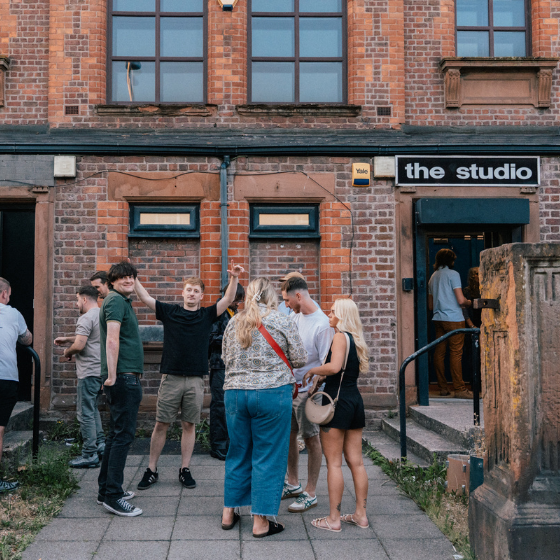
Walking into The Studio in Widnes, my first thought is that it is huge.
My second is that it looks a little bit like an old bingo hall. I’m not the only one. Later, Liverpool artist Remee admits she had exactly the same thought when she arrived. Cabaret tables stretch across the main hall, facing a proper stage with an impressive lighting and sound set-up. Elsewhere in the building there are studios and rehearsal spaces. It feels like the kind of place you could easily walk past without ever knowing what was happening inside.
Spend an evening here, though, and you begin to understand what a building like this actually means. The Studio is run by people who believe young people should be able to access music regardless of whether they can afford it. Speaking to Jackie Florek, a director, trustee and volunteer at the venue, she tells me they try to keep their youth music sessions free. In an area where many families are already struggling, charging young people to come and make music isn’t really an option. “You’re not going to be charging kids to come and play music,” she tells me. People donate when they can, a few pounds here and there, and it buys drumsticks, guitar strings and the other ordinary things that keep a rehearsal room functioning. “Who else is going to get them?” Jackie asks.
It is such a simple question, but it sticks with me as the night gets underway. Because eventually all those guitar strings, drumsticks, Thursday night sessions and hours spent making noise in rehearsal rooms have to lead somewhere. Tonight, some of them lead to the stage.
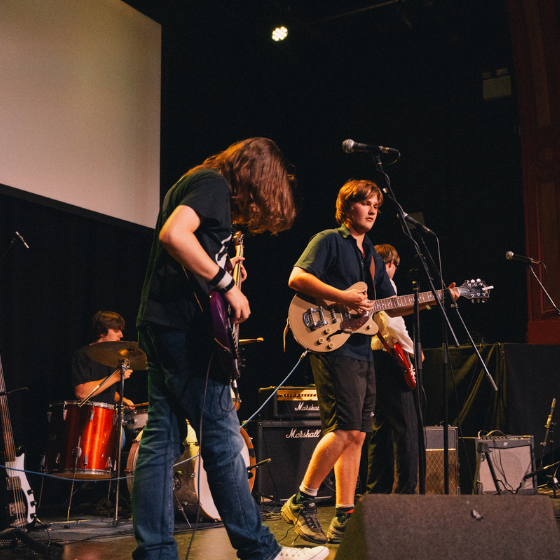
Young Widnes hard rock band Deep Dale formed through sessions at The Studio and still regularly play here. They arrive on stage with all the energy you would expect from a young band discovering how loud they can be. There are flashes of the heavier end of 70s rock, Motörhead and the kind of music built to be played at considerable volume. But what interests me most while watching them isn’t really who they sound like. It is that they exist here at all. A group of young people met through a free local music programme, formed a band and now find themselves playing the venue that gave them somewhere to begin.
Their parents are in the audience too. One tells me that The Studio is “one of the only places that’s local that’s free for them to be able to come and do it”. They talk about their son coming here with the other musicians after college to play and rehearse. It is the kind of ordinary weekly routine that can easily be overlooked when we talk about developing the next generation of musicians, but this is what it actually looks like. Young people need somewhere to meet, somewhere they can make noise and, importantly, somewhere that doesn’t require them or their parents to find money every time they walk through the door.
There is much less glamour in this part of a music career. We tend to celebrate artists once something has already happened, once there is a record, a headline show, a tour or enough people paying attention. There is less attention paid to the bit before that. Learning songs, meeting other musicians, playing badly, getting better and figuring out whether this is something you actually want to do. Spaces like The Studio hold that bit.
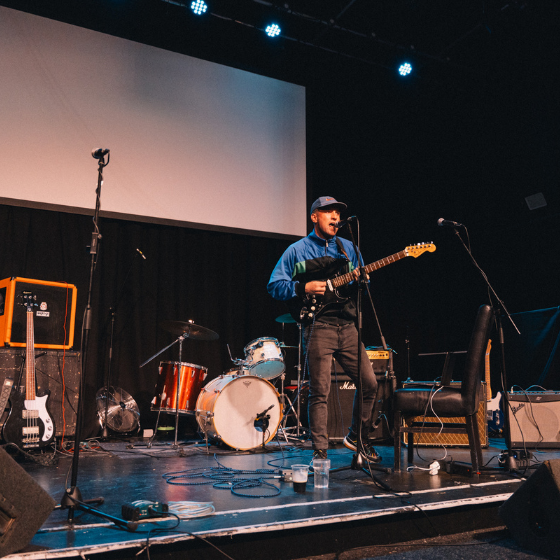
You can see different stages of that process across the evening. Tracky opens the night alone with his guitar and a happy-go-lucky backing track, bringing an indie electro-pop sound reminiscent of the 2010s. He has only just released his first single on Spotify and is at the beginning of whatever comes next. Deep Dale are developing together as a band in the very building we are sitting in. Then Remee arrives from Liverpool and brings something completely different into the room.
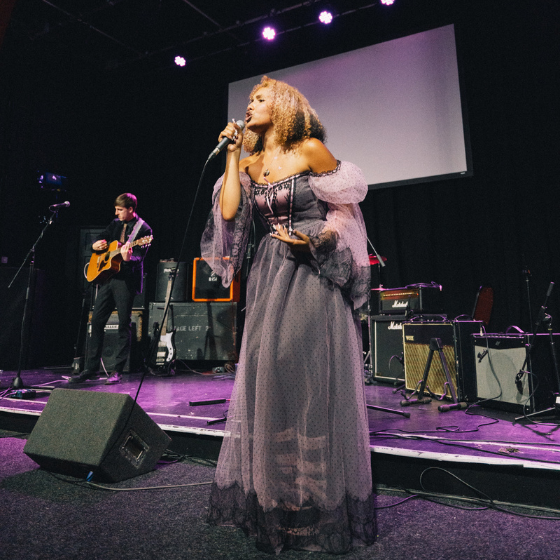
Performing with just her voice and guitar, there is a softness and power to Remee’s voice that glides across the room. There is a mystical quality to her storytelling and a natural theatricality in the way she performs, dancing around the stage and moving her floaty dress with her as though it is another part of the performance. A country-inspired song about two people moving in different directions is a particular standout, heartfelt and slightly unexpected amongst the different worlds her set moves through.
Afterwards, Remee tells me that creating those worlds is exactly what interests her. She grew up watching fantasy and horror films and wants to eventually build an entire visual world around her music. “I’m just in my own world and I’m creating a little world for people,” she says. There is something quite lovely about watching that happen here. For half an hour, this enormous old community building in Widnes becomes whatever world Remee wants it to be. She had never played The Studio before, but leaves wanting to return. “I loved the vibes in there,” she tells me. “I’ll definitely be coming to play here again.”
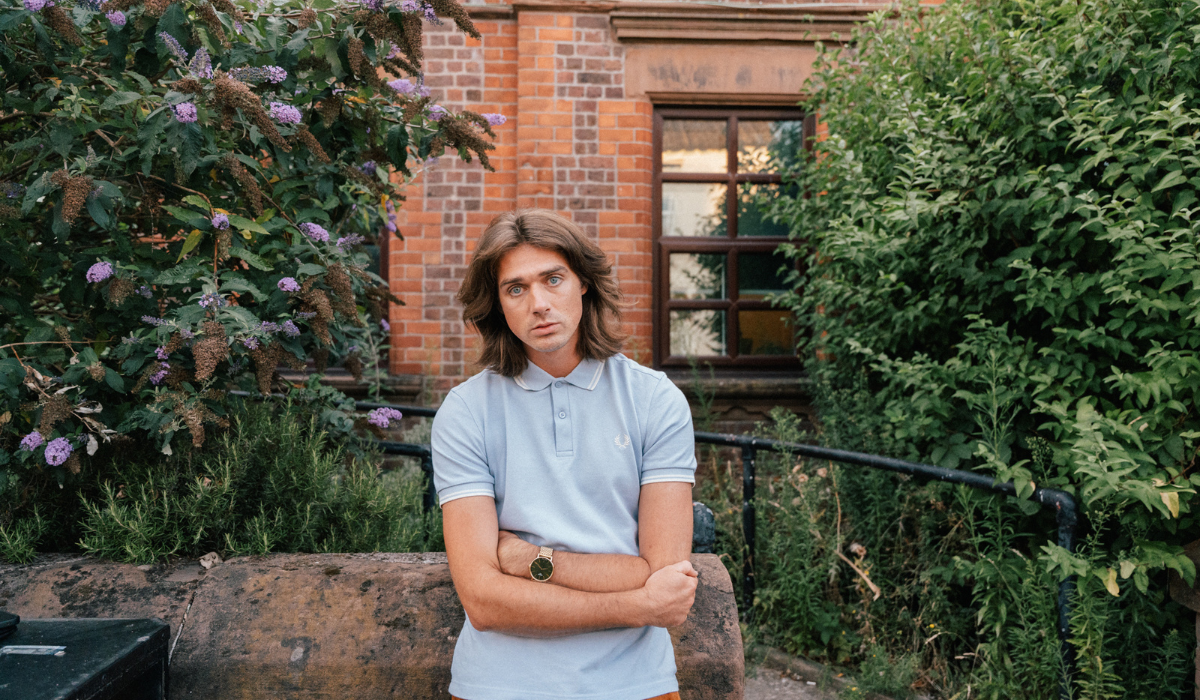
For headliner Callum Codd, the relationship with this building goes much further back. Callum is from Widnes and, as a teenager studying music at college, Tuesdays were spent at The Studio learning songs and practising with bands. He remembers it as pretty much the only venue of its kind in the area. “This is the place,” he tells me.
An indie guitar lad through and through, Callum has spent most of his life playing in bands. He got his first guitar after his older brother introduced him to Oasis, before discovering Arctic Monkeys, The Black Keys and the bands that made picking up a guitar and thrashing around with your mates feel possible. He started playing live at 17 with The Racket and, even after that band eventually came to an end, never really stopped. When he doesn’t have a gig booked, he tells me he will often find himself at an open mic with his acoustic guitar simply because he wants to play.
Years later, he is back in the room where he once practised, this time at the top of the bill. His set is energetic and personal, with songwriting that pulls from his own life, but one of the most affecting moments comes when the rest of the band leave the stage. Callum sits down, alone with his acoustic guitar, and it is as if the room shrinks around him. Earlier, he had joked about worrying that The Studio might feel “a bit hollow”. It is, after all, an enormous space. But in that moment the opposite happens. The room becomes intimate and the stories behind the songs come right to the front.
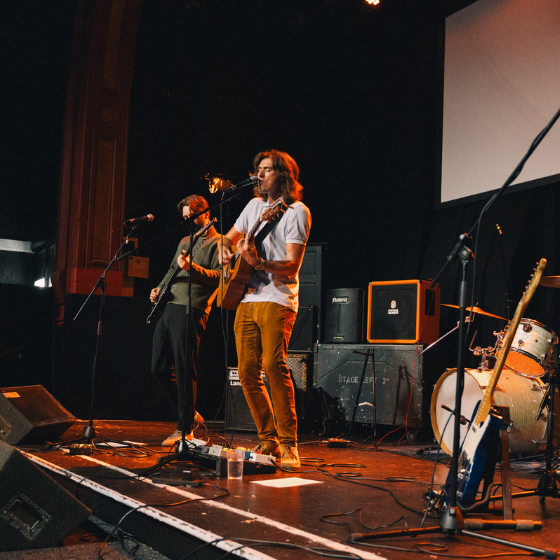
There is a strange circularity to watching him there. A young musician comes to this building to learn songs and rehearse with other musicians, spends years playing in bands and eventually returns to the same room as a headliner. Somewhere else in the building, another young person might only just be learning their first song. That cycle is what places like The Studio protect, and in Widnes there is already a reminder of what can happen when those spaces disappear.
Just around the corner once stood the Queen’s Hall. Callum tells me about an old gig poster he keeps at home advertising The Beatles playing there in 1962. He finds the words “The Beatles: Widnes” funny now, almost as if the two shouldn’t exist together on the same poster. But they do. The Queen’s Hall is gone now, while The Studio is still here, and that feels important in a place with a musical history that can easily become overshadowed by the city down the road.
Speaking to Jackie earlier in the evening, she talks about the importance of giving younger generations access to whatever they are interested in. There is nothing particularly complicated about her reasoning. People need somewhere to go. Musicians need somewhere to play. Young people need somewhere they can discover the things they might eventually spend their lives doing. Sometimes that requires somebody else to fight to keep the doors open and somebody to work out where the next packet of guitar strings is coming from.
That is perhaps what Bands in the Boroughs reveals best when it moves beyond Liverpool city centre. Not that music can be brought into places like Widnes, but that it was already here. It is in teenagers meeting at Thursday night sessions, parents driving their kids to rehearsals and volunteers keeping those sessions free. It is in a young band making noise together for the first time, an old Beatles poster from a venue that no longer exists, and Callum returning to the room where he once practised to find himself headlining the stage.
Before there is a headline show, a tour or a record, there has to be somewhere to start. In Widnes, The Studio is still making sure there is.
Words: Kieran Irvine